When Jenny, who grew up at Hockerton Housing Project, left to take up a place at University we thought it was an opportunity to ask her what contrasts she noticed between HHP and University life!
I recently left Hockerton Housing project to go to the University of Nottingham to study for a Masters degree in Biology.
This move provided a unique opportunity to document my experience and the differences and similarities that I noticed between home and University. It is difficult to compare two such establishments, an eco community of five households I have lived in for fourteen years and halls of residence housing I have lived in for a year which houses around 350 students.
Clearly these living arrangements are on very different scales. However, I will not so much try to compare them but discuss the positive and negative environmental impacts of the University that I noticed in my first year.
On moving into the halls of residence I first noticed that there were photovoltaic cells on the roofs and recycling bins in each block of rooms, making it easy for the students to sort their rubbish. I also noticed that students make good use of public transport as well as choosing to cycle and walk rather than driving. This is something that maybe mostly motivated by money and the absence of parking spaces for students on the campus but which nonetheless contributes to the greenness of the University and students.
Communal living at university lessens the amount of autonomous decisions that you have. For instance regulating lighting and heating in communal areas is difficult. Communal living at University presents the obvious issue of food waste, especially in catered halls where hundreds of students are fed at each meal time. Food is thus cooked in bulk and waste is inevitable. It also makes it impossible for students to choose the source of their food. These are issues which would be hard to resolve. At Hockerton Housing Project families are required to spend part of their week growing food on an organic allotment to supply locally grown food and thus reduce the carbon emissions associated with food production.
For many students it is true that being eco-friendly is not a priority. Students live busy lives and have, not only University studies to complete, but also have to learn to live independently. This is particularly apparent in first year when fending for oneself and coping with living away from home is the main focus!
A significant aspect of University is that it brings together people from all different walks of life. However this also highlighted to me the difference between my and my fellow students upbringings. I was able to access a vast amount of environmental knowledge and understanding when I was growing up, something that many students did not have the opportunity to experience. Thus for most of them coming from a background where recycling is not undertaken and where space heating is used all year round, it must be difficult to see what can be achieved on a day to day basis.
It is clear that the university is involved with environmental issues. Having been asked to write this article I decided to research into the environmental efforts of the University. The University of Nottingham is one of the leading green Universities and is currently 2nd in the UI Green Metric of the world’s leading green Universities. It has a group called the ‘Young Greens Society’ which is affiliated with both the Young Greens and the Green Party and raises awareness of sustainable issues and the Green Party.
 Also Nottingham University School of the Built Environment has a number of exemplar low CO2 emission buildings which are on the campus and provide an opportunity for academic research and evaluation. Students on courses within this Dept. are also regular visitors to Hockerton Housing Project.
It is clear that the University makes an effort to be environmentally friendly by producing electricity, providing students with recycling facilities and through its academic efforts. It would be interesting to consider how the University could make sustainability more central to their students life experiences and the impact this could have on the future lives of its graduates. Student welfare is central to the University’s but this service seems to focus primarily on financial, health and academic dimensions and does not prioritise sustainability…..is this a missed opportunity???
If you would like to visit Hockerton Housing Project with a group of students, then please contact us
Jenny Rajan
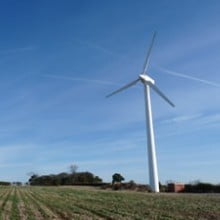 The Sustainable Hockerton community-owned wind turbine continues to turn a profit! Members of the Society have received payments of 8% interest and there is enough money left in the bank to donate £10,000 to the village to pursue sustainability and energy saving projects. Not bad for the second year of full operation! The most frequent quote from investors was “I only wish I had invested more!”
If you would like help with setting up a community wind turbine project please contact us.
 The residents of Hockerton Housing Project have installed another community-owned solar PV system. This will expand the PV generation by the co-operative from 7.6kW to 13.6kW and make the site a net exporter of electricity.
We decided to install additional capacity as our current energy use is higher than originally expected, due to the number of people working in our business or from home. The additional capacity also prepares us for electric vehicles.
Conversations have started about going off-grid. It seems that the risks to grid supply do not outweigh the environmental and financial costs of batteries… for now.

We were delighted to see the positive feedback from residents of our Retrofit for the Future project in the local paper.
“A couple whose council house was transformed in a bid to save energy are reaping the rewards just over a year on.”
The two houses in Newark that we retrofitted in 2010 as part of the Technology Strategy Board’s Retrofit for the Future project have now been re-occupied for over 12 months. As part of the project, the energy use and environmental conditions are being monitored for 2 years following the retrofit, so we’ve done some initial analysis of the first year’s data, and here’s a summary of our findings.
In one house, the tenants are the same retired couple that lived in the house prior to retrofit, so we can compare the past year’s consumption with previous bills as well as the post-retrofit predicted energy use from the SAP calculations.
Prior to the retrofit, the couple’s annual energy use was 15,695kWh. For the first 12 months of occupation post retrofit, Oct 2010 to Oct 2011, their total energy use was 5,305kWh, a reduction of 66.2%. As a part of the retrofit solution, we decided to make an investment in a local community-owned wind turbine, rather than install renewables on the houses (as this was not appropriate for a number of reasons). Including one house’s share of the annual production of the wind turbine, 1,943kWh, means a net consumption for this house of 3,362kWh, a reduction of 78.6%.
The reduction in annual CO2 emissions is lower at 57.9% due to the fact that all energy use in the house is now electricity, which has higher carbon intensity than gas.
Electricity is also more expensive per kWh than gas, so the reduction in annual fuel bills is also lower at 26.4%, but we have to remember that this is in a climate of rising energy prices, where other consumers would have probably seen their bills rise by an average of 10-15% in the same time period, so in real terms the residents have seen a reduction in energy costs of 35-40%.
The post retrofit SAP calculations predicted an annual energy use of 4,385kWh, but this is only for heating, hot water, ventilation and lighting energy use. We are monitoring 8 individual electrical sub-circuits in the houses, so can compare SAP regulated energy predictions to actual usage. This shows that actual energy use for these regulated elements was only 2,309kWh, 47% less than predicted. Looking at the actual energy use for the sub-elements of the SAP calculation, heating and ventilation energy use were very similar to SAP predictions. The largest reductions were energy for water heating, actual use of 1,186kWh compared to a SAP prediction of 2,696kWh, and lighting, actual use of 62kWh compared to a SAP prediction of 752kWh. The residents clearly use lighting very sparingly! In relation to the hot water disparity, this can probably be explained by the more efficient, HHP designed ‘Hotsi’ hot water system installed, and the fact that SAP assumes a greater occupancy for a property of this size – 2.53 occupants whereas there are only 2.
Analysing the breakdown further, non-regulated energy use (cooking and appliances), which is highly influenced by occupancy levels, accounts for 57% of the total energy use. If we also include energy used for water heating, another element highly influenced by occupancy levels, then this percentage increases to 79%, which clearly illustrates the impact occupancy has on energy use in a very energy efficient house.
Annual gas consumption prior to the retrofit was 12,493kWh, which would have been primarily for heating and hot water, aside from a small amount of gas used for the hob. Post retrofit, annual energy use for heating and hot water was 2,061kWh, an 83.5% reduction.
The neighbouring house that was retrofitted as part of the project is occupied by a couple with 4 children (which rose to 5 during 2011 – congratulations!) However, they were not the pre retrofit occupants, so we cannot do a pre and post retrofit comparison of their energy use. Their total energy use for their first year of occupation was 8,522kWh, or net of 6,579kWh after accounting for their house’s share in the community wind turbine. This is almost double that of their neighbour’s, but there are 6 (now 7) occupants as opposed to 2 next door, and as we’ve seen occupancy has a significant influence on total energy use.
This analysis is based on the first year of occupancy, to Oct 2011, and there are a number of factors that we believe will have caused this 12-month period to have higher energy use than we’d otherwise expect:
- The retrofit design is based on the principals of passive solar design and high thermal mass (like the homes at HHP), but the houses were completed and re-occupied entering the heating season, so were still drying out and had not had chance to build up a store of energy in the mass to help them through the winter;
- The Envirovent MVHR units broke down and/or were replaced on numerous occasions during the first winter (the first house had 4 units in 12 months) leading to significant periods where the occupants had to open windows to ventilate the house, which completely undermines the design and will negatively impact thermal performance and the homes’ comfort;
- The winter of ’10-’11 was extremely harsh.
In relation to point 1, when the first house was re-visited in October 2011, the internal temperature was 24oC on a Sunday evening, and the occupants had not had to start using the electric heaters, whereas 12 months earlier when they first moved in the internal temperature was 19oC and the heaters were already on for a few hours each day.
As we exit the ‘11/’12 winter (hopefully!), which was much milder than the previous year, it looks like energy use is reducing, at least in the first house where occupancy levels are the same. Comparing total energy use in this house for the November – February period with the same period from the previous year, shows a further 25.7% reduction. In the second house, the energy use for the same period compared to the previous year has actually increased by 9.7%, but there is increased occupancy, and as we have seen, and see here at HHP, occupancy level has a significant impact on energy use in very energy efficient homes.
But what do the residents think about their new homes? We’ve not been able to contact the family in the second home, but have spoken to the retired couple. They had occupied the house for 40 years prior to the retrofit, so are well placed to comment on their new home. There have been some issues, most notably the Envirovent MVHR units frequently failing in the first year, and occasionally find the house too hot in summer or too cold in winter, but on the whole they are very happy with their new home.